
Driven by a mission to reconnect the quiet and ancient art of kayaking with a vital modern purpose.
Here is how we bring purpose back to paddling.
We push for a world where every paddler is a protector of the ocean, equipped with the tools to defend ecosystems, and deliver data that protects and helps.
The Vision:
Purpose Paddling will bridge the gap between recreation and scientific action and empower kayakers to collect critical environmental data and mobilize a global coalition for clean oceans and healthy communities.





My name is Kristian Louis Erni Jensen, I hold a masters degree in Environmental Protection and a lifelong commitment to using it.
A kayak is not just a vessel for recreation, it is a quiet witness to the changing pulse of our oceans. When we paddle with purpose, we transform our deep understanding of the water into the very tool needed to save it.
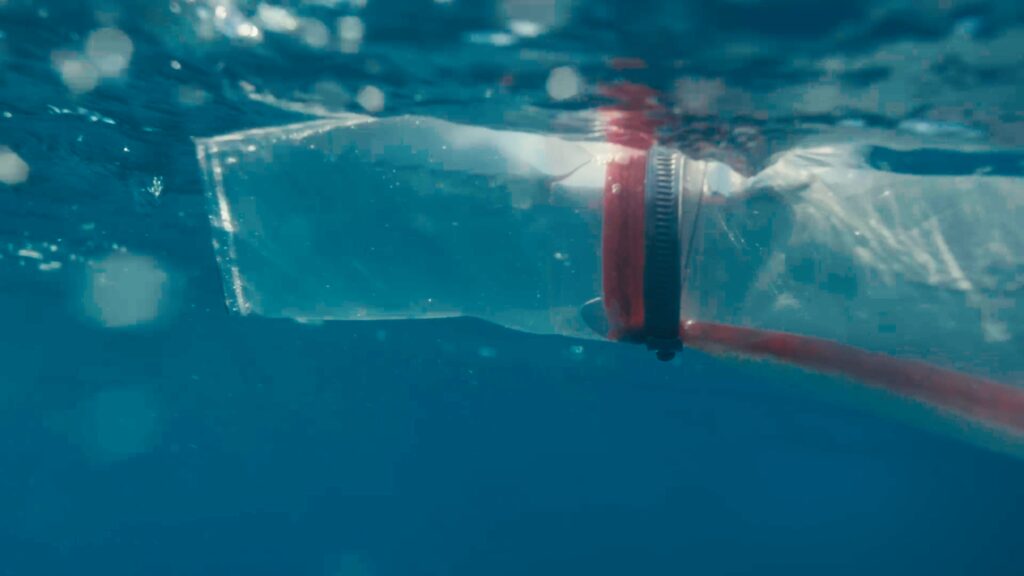
Our foundation at Purpose Paddling is built upon a breakthrough in accessible marine research, specifically designed for the everyday paddler. Traditional microplastic sampling is often expensive and restricted to large research vessels operating in open oceans. To solve this, we developed the Plastsaq, a lightweight, modified neuston trawl equipped with a 333 μm mesh net that is easily towed directly behind a kayak.
Because kayaks can navigate shallow coastlines, delicate arctic ice edges, and narrow rivers, the Plastsaq allows us to sample nearshore and difficult to access surface waters that larger boats simply cannot reach.
Collecting the water sample is only the first step. To make the analysis cost effective and scalable for a global community, we utilize a rapid screening technique using Nile Red fluorescent tagging. When the samples are treated with Nile Red dye, the hidden plastic polymers glow brightly under a specific blue light. We then photograph these glowing particles and use semi automated computer scripts in the program ImageJ to quickly and accurately count and measure the microplastics. This method bypasses the incredibly slow and costly process of traditional visual inspection under a microscope.
This combination of the Plastsaq trawl and Nile Red screening is a perfect fit for global citizen science. Kayak clubs, tour operators, and individual paddlers can adopt this simple methodology to trawl a set one kilometer distance on their regular recreational routes. By repeatedly sampling the exact same stretch of water over weeks, months, or a full year, citizen scientists can generate vital temporal data. This continuous, large scale monitoring helps track how plastic pollution accumulates over time, pinpoints local riverine or industrial sources of contamination, and provides the massive datasets researchers desperately need to understand the true impact on wildlife and push for real environmental policy changes
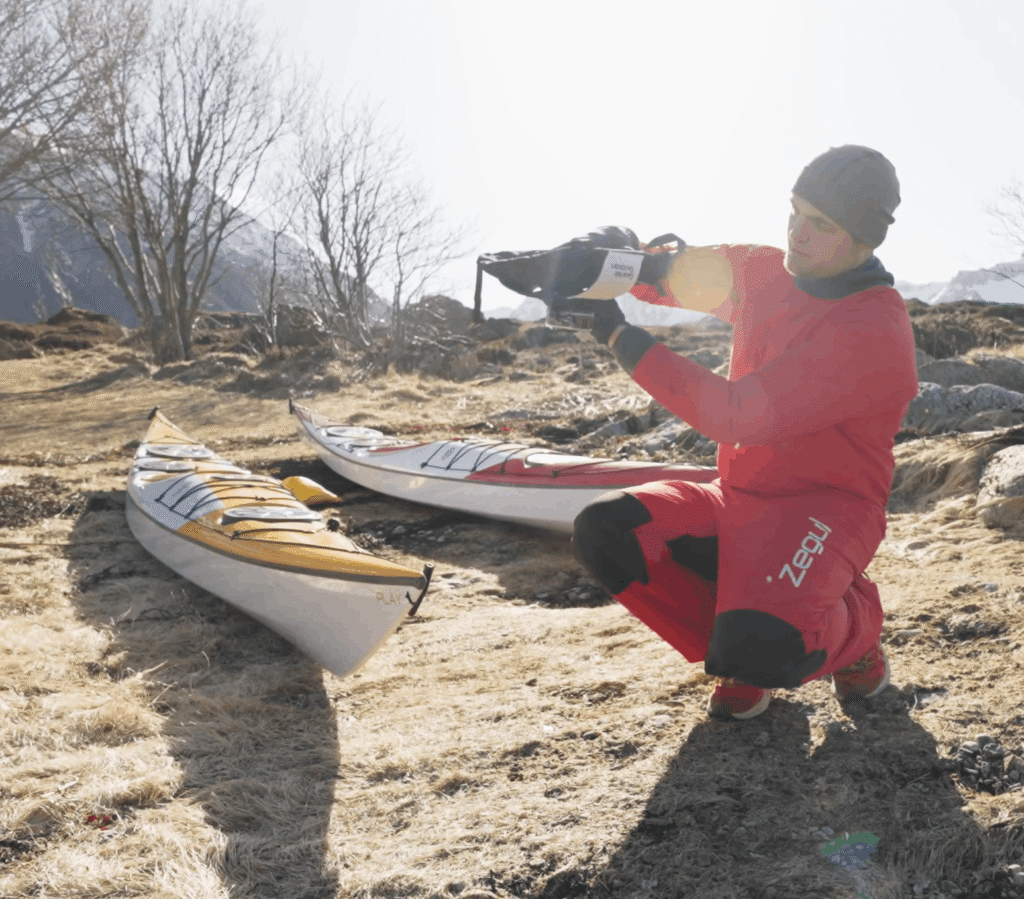
Purpose Paddling proposes a groundbreaking yet highly accessible method for kayakers to monitor the seafloor using simple action cameras like GoPros. We are working to design a streamlined device that attaches a camera directly under the kayak.
Crucially, this setup connects to a continuous GPS receiver above the water, automatically mapping and geo-tagging your underwater video footage as you paddle. To add necessary scientific rigor, the device will incorporate three parallel lasers, projecting a visual reference onto the seafloor to accurately estimate the size of marine life and benthic structures.
The real power of this proposal lies in what happens after you return to the shore. We are developing a specialized Python machine learning script designed to analyze this underwater footage automatically. Instead of researchers spending countless hours manually reviewing video, our script will rapidly identify benthic species, perform presence and absence analysis of vital seaweed and kelp forests, and automatically count sea urchins to monitor destructive overgrazing.
This technology transforms raw, accessible GoPro footage into precise, location-based ecological data.
I imagine a world where every single recreational kayak tour brings back valuable information to help save our oceans.
To make this a reality, I need your help to build a centralized digital platform where paddlers from around the globe can easily upload their geo-tagged videos. This platform will run the machine learning analysis and immediately share the insights with conservationists, marine biologists, and policymakers. We want to ensure that this continuous stream of crowdsourced data does not just sit on a server, but is used directly to trigger and guide proactive restoration of our coastal waters
We’re convening a global coalition on car tire toxicity to connect science, Indigenous knowledge, and policy. And to turn tire pollution from an ignored problem into a regulated reality.
The crisis of plastic pollution goes far beyond what we can see with the naked eye. Purpose Paddling is pushing for a Global Coalition on Car Tire Toxicity as a dedicated initiative to confront one of the most pervasive, yet invisible, threats to our aquatic ecosystems.
The recipe for car tires is a commercial secret, yet we are releasing these covert chemicals at a planetary scale. We have found a tracer for car tires 6PPD, an antioxidant designed to prevent tires from cracking. However, as tires wear down, this chemical reacts with atmospheric ozone to form a highly toxic transformation product known as 6PPD-quinone. This compound is acutely toxic to aquatic life, notably causing mass mortality events in certain fish species (Salmon and Cod), and is currently washing into our watersheds at a staggering rate.
Purpose Paddling foresees a direct and actionable way for kayakers to become the frontline defense against this hidden pollutant. We are developing a protocol for kayakers to sample nearshore and difficult to reach water columns for these specific tracers of car tires. Because 6PPD and 6PPD-quinone are distributed in surface runoffs and currents, kayakers are perfectly positioned to collect vital water samples that traditional research vessels cannot. By equipping our community with the right sampling kits, we can map the true global spread of this toxicity.
To prove this concept in one of the most pristine and vulnerable environments on Earth, we are conducting our inaugural field testing this coming summer of 2026 in Greenland. By sampling the coastal arctic currents, we aim to determine if the Arctic has become a sink for air-transported car tire particles and their toxic chemical signatures.
This Greenland expedition is just the beginning, and there is much more to come. To make this work, we need helpers. We need paddlers willing to take samples, scientists ready to analyze the data, and everyday citizens to help fund the logistics of this massive undertaking. The water connects us all, and tracing this invisible toxicity is the first step to stopping it.
Why Paddle with Purpose?
I have paddled every corner of Lofoten, and Laukvik Nature Reserve is simply the most breathtaking place to be on the water. Kayaking is the most immersive way to truly experience Lofoten’s oceanscape – and nothing compares to finding yourself on a secluded beach, underneath the midnight sun, on a pristine private island.
Purpose Paddling is about more than just a kayak tour. We take you on an exclusive, immersive journey to the real gems of Lofoten – crystal clear waters, white sandy beaches, hidden paradises, and serene wildlife reserves where the nature of these islands truly takes your breath away.
Purpose Paddling is a family-owned, Inuit-rooted kayak company, owned and guided by Kristian Louis Erni Jensen – a world renowned expedition kayak guide with a master’s degree in environmental protection. Every tour combines adventure with genuine curiosity for the world around you. You will leave with a deeper understanding of why Lofoten is considered a global treasure.
Book your tour today and experience an adventure that is as enriching as it is unforgettable. Paddle with purpose – and beware, once you let Lofoten into your heart, you will carry its fragile beauty with you forever.
Purpose Paddling is an independent research initiative uncovering how microplastics and car tire pollution reach even the most remote Arctic ecosystems.
Click here to read my business plan for investors and philanthropist
Through kayak-based citizen science, we collect environmental data from places traditional research vessels cannot reach.
Your support helps fund research equipment, sampling tools and future Arctic expeditions.
Kristian Jensen, Tasiilaq, Greenland